Lifecycle construction
Lifecycle construction delivers sustainable, predictable and long-term value. In this model, design, construction and maintenance are managed as a single whole in close cooperation with the client. SRV typically takes responsibility for the property for around 20 years, ensuring consistent quality and reliable long-term maintenance.
SRV has extensive experience in delivering lifecycle projects across Finland.
What kind of projects is the lifecycle model suitable for?
The lifecycle model brings predictability and reduces unexpected costs, as the service provider assumes responsibility for maintenance and related expenses. Engaging a consultant experienced in the lifecycle model early in the project helps in selecting the most suitable contract model and carrying out the necessary studies.
The lifecycle model is well suited to municipalities and cities seeking healthy, safe and adaptable facilities such as schools, day-care centres or multipurpose buildings.

Why choose lifecycle construction?
When design, construction and maintenance are managed together with SRV, the client receives premises designed for functionality and maintained throughout their lifecycle. As responsibility transfers to SRV, the client's risks decrease and decision-making becomes faster.
The benefits of the lifecycle model are best realised when goals and requirements are carefully defined at the start. SRV takes into account the budget, technical and functional requirements, usability, service level, and environmental and energy efficiency targets. SRV's solutions address both current and future needs.
The client defines the agreed condition of the property at handover, and SRV ensures that the building remains in that condition throughout its lifecycle, including after 20 years.

Benefits of lifecycle construction for the client
The client can tailor financing in the way that best suits their needs.
The lifecycle model follows well-established industry standards, and a single contract covers the entire project.
The model offers the flexibility to modify parts of the building during its lifecycle to meet changing needs.
The agreed condition of the property at handover ensures that the building is in good condition at the end of the contract period.
Comparisons between traditional separate design, construction and maintenance contracts and lifecycle offers show that lifecycle projects deliver better overall cost efficiency. Winning lifecycle bids have consistently proven more economical than alternative implementation models.
Because the service provider is responsible for maintenance costs, the lifecycle model encourages efficient energy solutions to be considered from the design stage.
Combining design and contractor selection makes the design and procurement process more efficient. Projects progress faster when a single partner is responsible for design, construction and maintenance.
A key benefit of the lifecycle model is effective risk transfer: unexpected repair and maintenance risks during the use phase are transferred to the service provider.
The contract can be terminated within an agreed timeframe if needed, while the service provider remains committed for the entire contract period.

Energy and lifecycle services
When a building is designed with a lifecycle-wise approach from the start, significant savings can be achieved through efficient use and maintenance. SRV's in-house expert team acts as the service provider in SRV's lifecycle projects.
Read moreExplore our energy and lifecycle service references
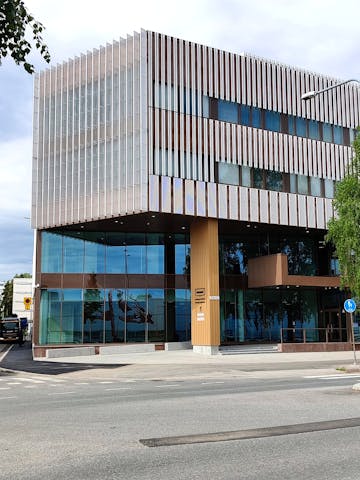
Helsinki Upper Secondary School of Languages

Wintteri multipurpose centre
Contact us